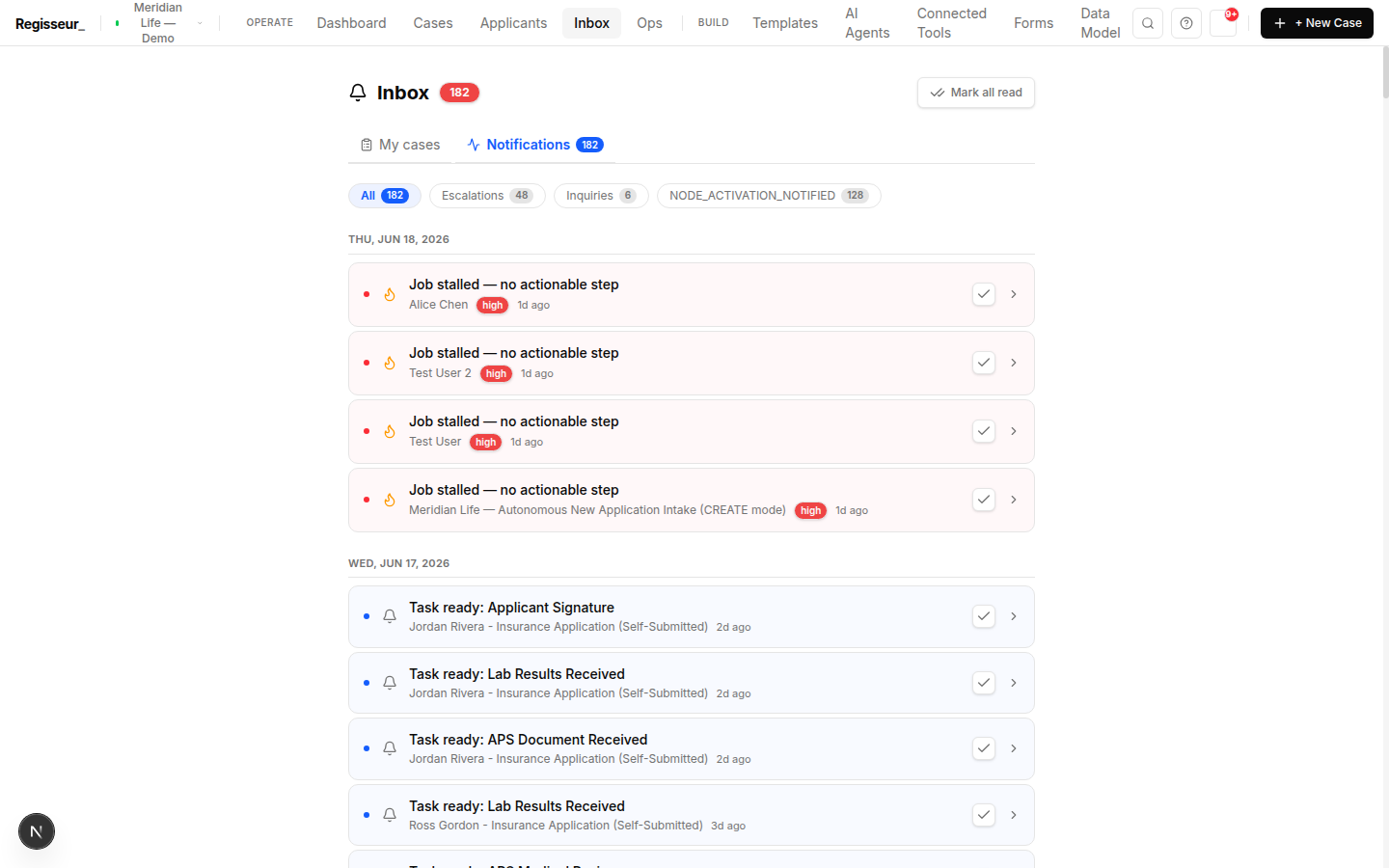
The Inbox.
Everyone's work queue. Acting on a task is the trigger — the moment you complete or approve, the cascade advances the case automatically. No separate "continue" step.

A queue that routes the right task to the right person, review screens with the evidence attached, and a case record that always answers “what’s it waiting on?” The human-in-the-loop the safety page promises — as an actual product surface.

Everyone's work queue. Acting on a task is the trigger — the moment you complete or approve, the cascade advances the case automatically. No separate "continue" step.

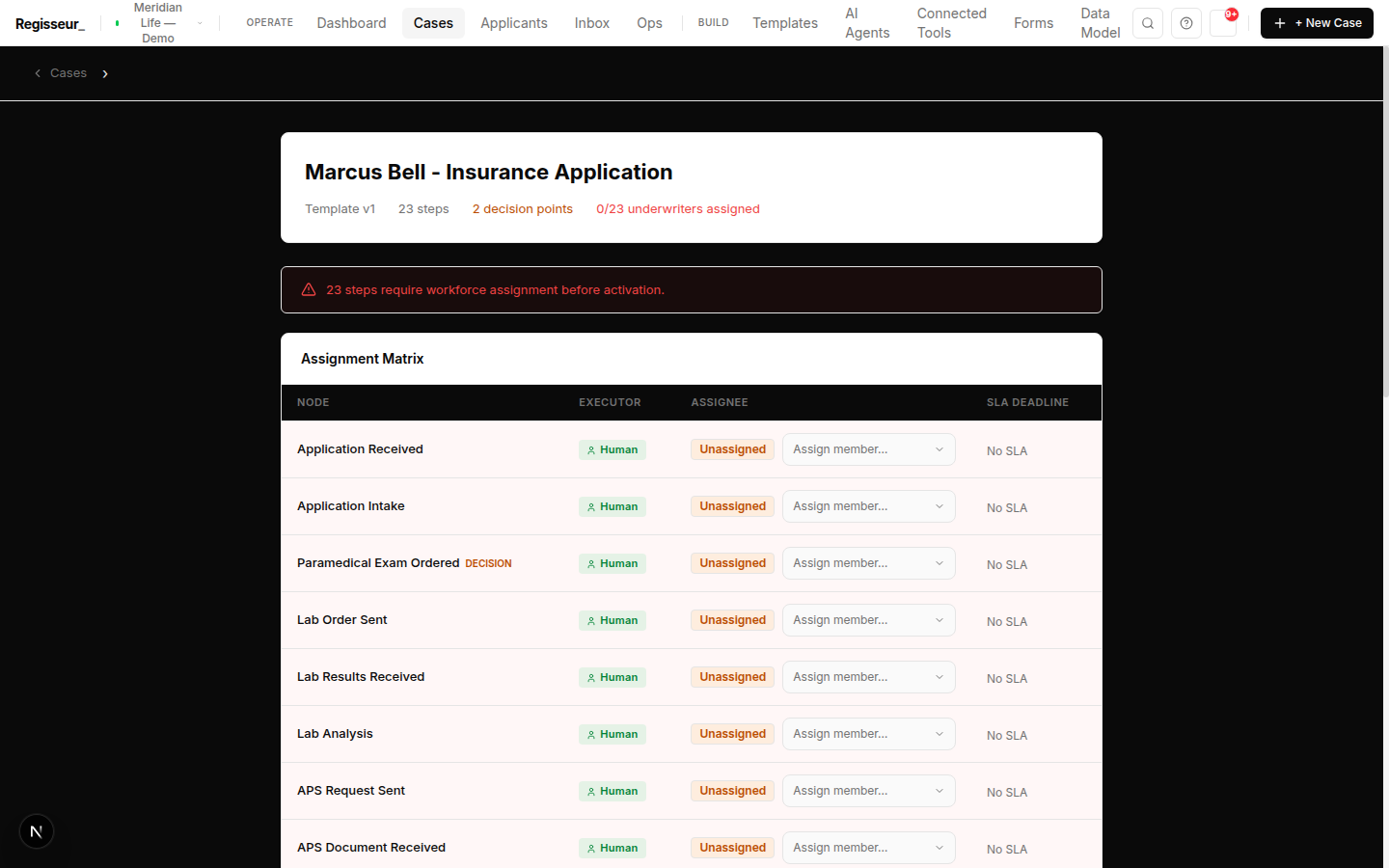
A review screen shows what you're deciding and the context to decide well: the approve/reject action, the assignment matrix (who's eligible and why), the SLA (due / overdue), non-blocking warnings (advisories that inform but don't block), and the artifacts the step produced.
Approve and the case advances; reject and it follows the workflow's rejection branch — not a dead end.

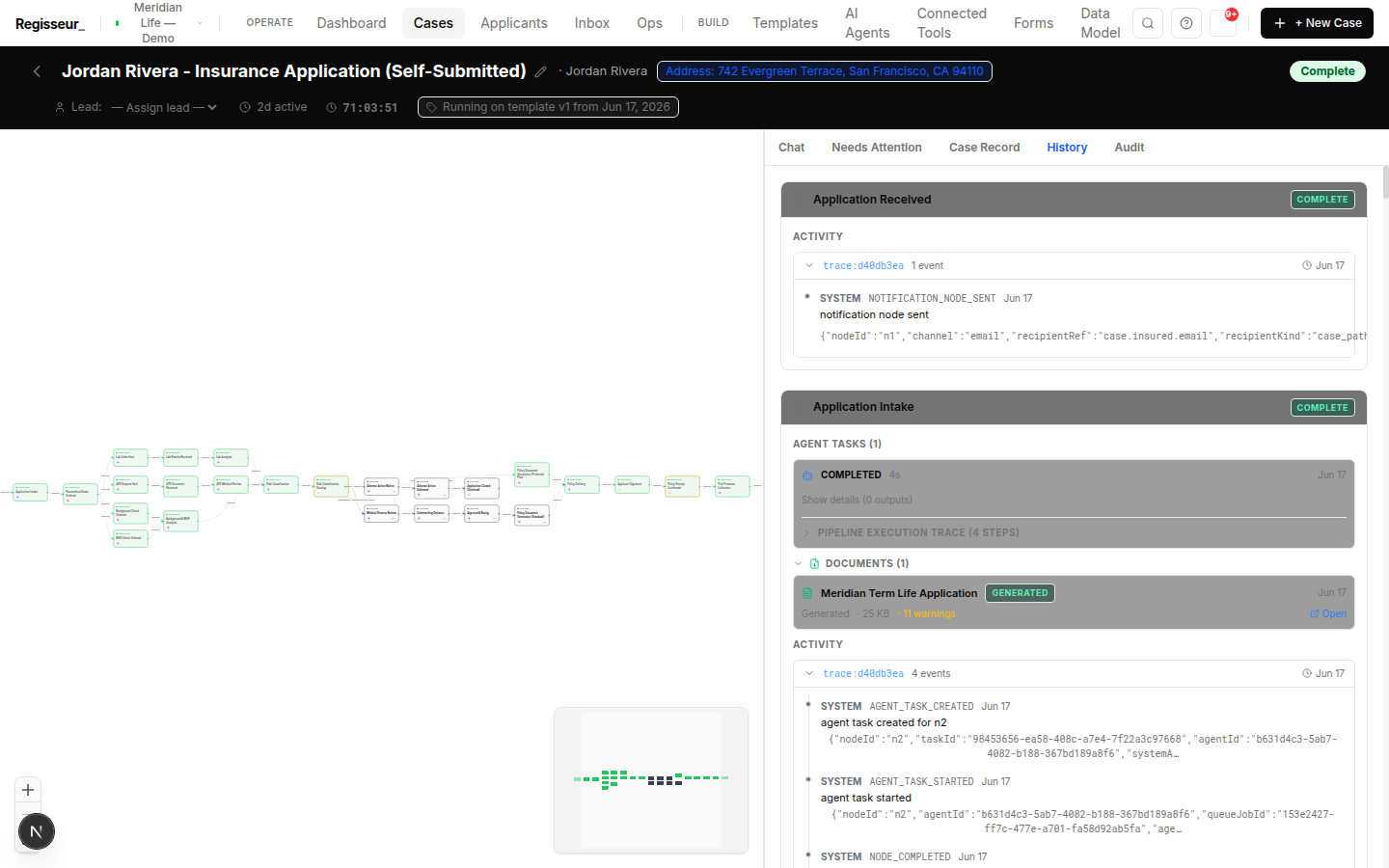
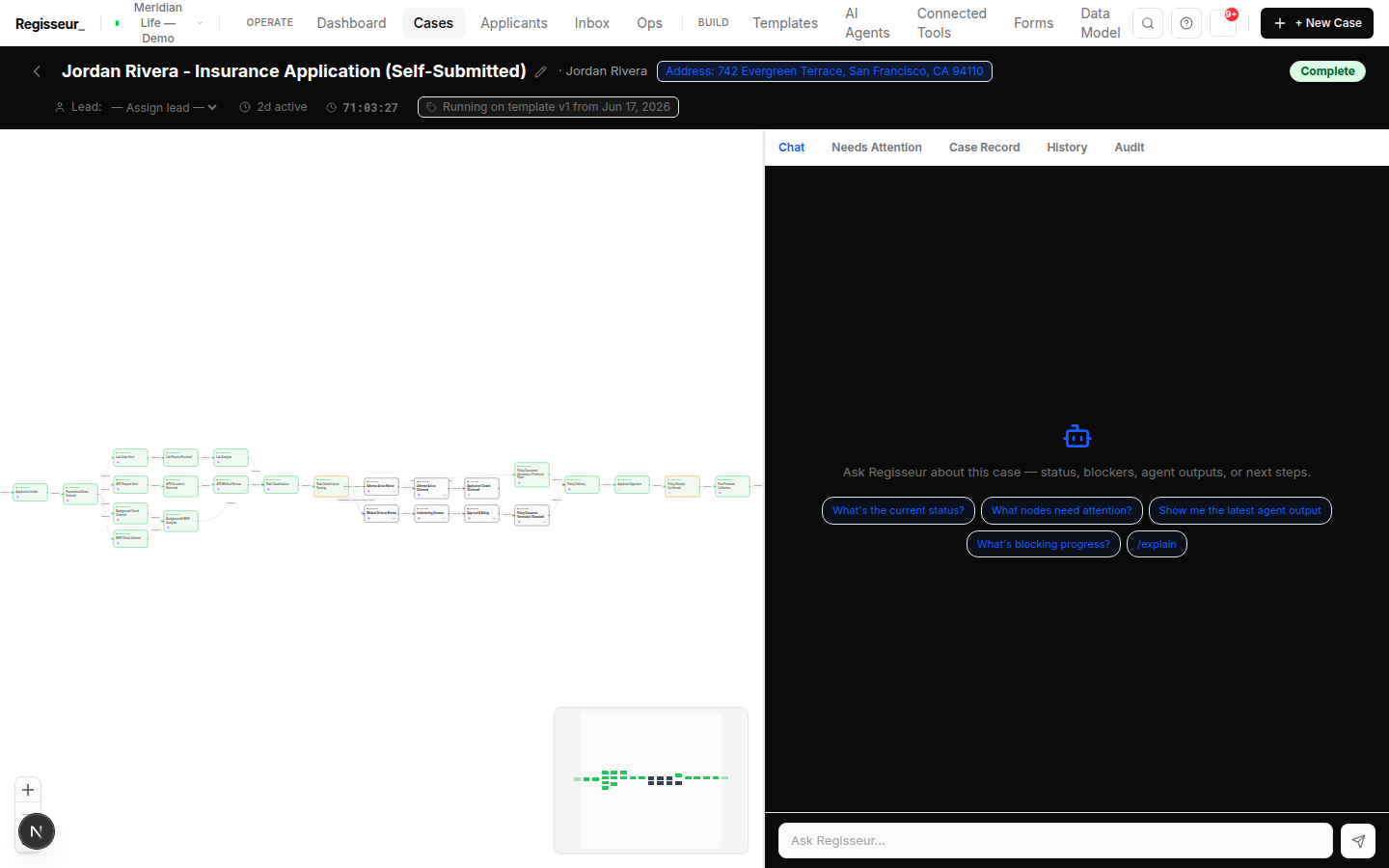
Open any case for its full record: Case Record (structured data), History (the timeline of every node, actor, and time — where you diagnose a stall), Artifacts (documents produced or collected), and Related Cases (the chain when one process triggers the next).


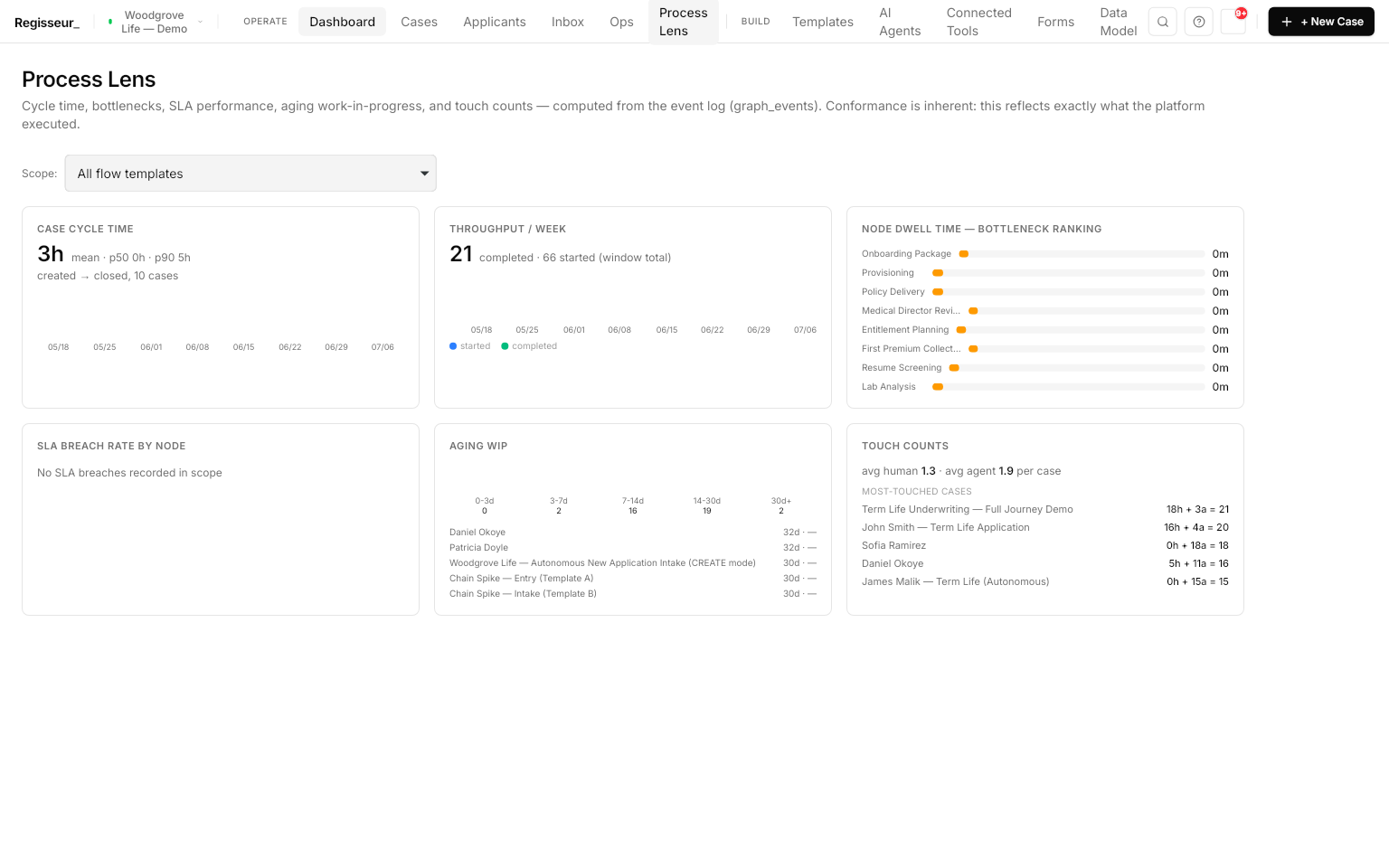
The workspace-wide view: throughput, cycle time (median / p90), automation rate, and SLA-breach / at-risk counts, trended over time. Every figure comes from real case data — nothing fabricated.
Bring one process and its review gates. We'll route tasks to the right people, decide on a real review screen with the evidence attached, and trace the case end to end in its history.