§ FormsDocument · REG-FORM-2026.06

Your forms already exist. Teach them to the system once.

Upload a PDF or define a form. The platform suggests how every field maps to your case data. You confirm. From then on, the same form captures intake, fills generated documents, and pushes to systems of record. One mapping engine, three jobs.

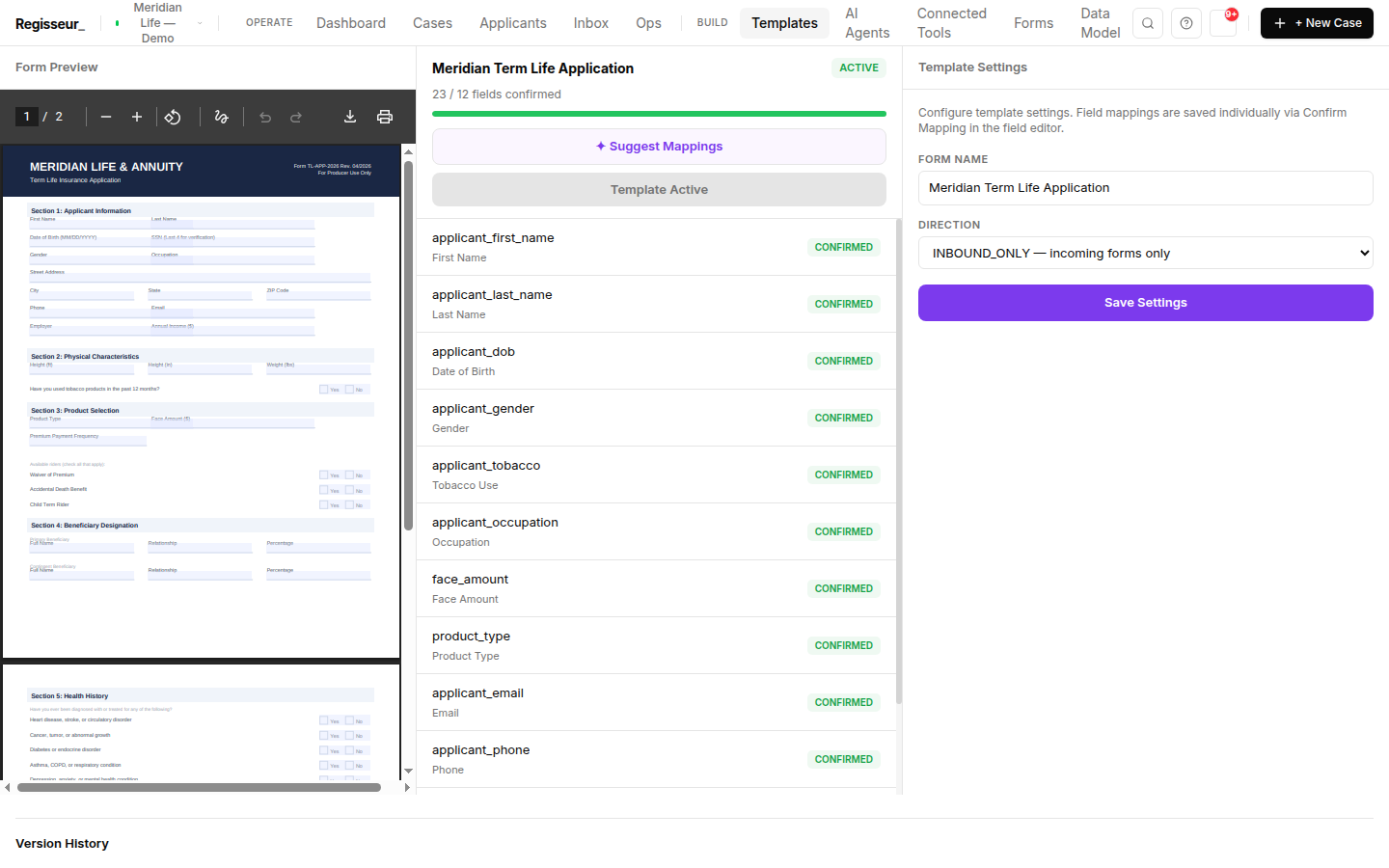
The field-mapping screen: a PDF preview of the Meridian term-life application beside twelve confirmed field-to-attribute mappings, a confirmed-fields progress bar, and a Suggest Mappings button.
AI-suggested, human-confirmed12 confirmed field→attribute mappings on the term-life application
§ 01AI-assisted mapping

AI-assisted field mapping, human-confirmed.

Upload a form and the platform reads its fields and proposes which case-data path each one maps to (case.applicant.full_name, case.policy.coverage_amount, …). Suggestions are staged for your review. The AI never writes a mapping directly. You confirm, adjust, and save.
§ 02Canonical store

One canonical store.

Every case keeps its structured data in one place, addressed by a stable path. Map a field once and the value captured at step 1 shows up correctly at step 12, across forms, agents, documents, and views.

They all read and write the same canonical store. No shadow copies to drift apart.

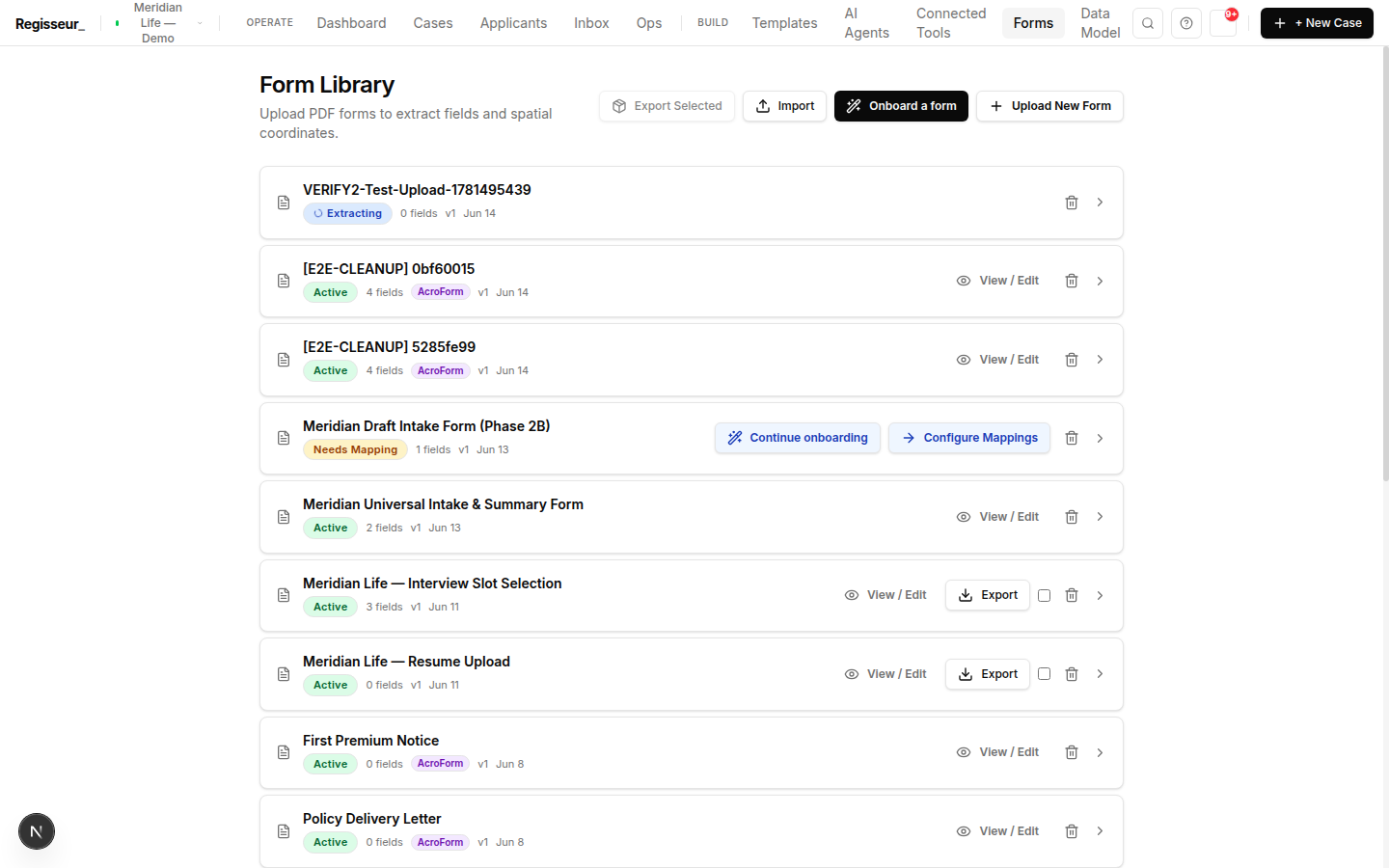
The form library: term-life application, lab results, and APS request letter, each with its field count, type, and mapping status.
The form libraryEach form's fields, type, and mapping status
§ 03One engine

Capture, fill, push: the same engine.

The mapping is bidirectional. Field mapping is one engine; PDF fill and API push are output modes of it, not three separate integrations to maintain.

Capture
Form fields → case data
Fill
Case data → AcroForm PDF
Push
Case data → external API
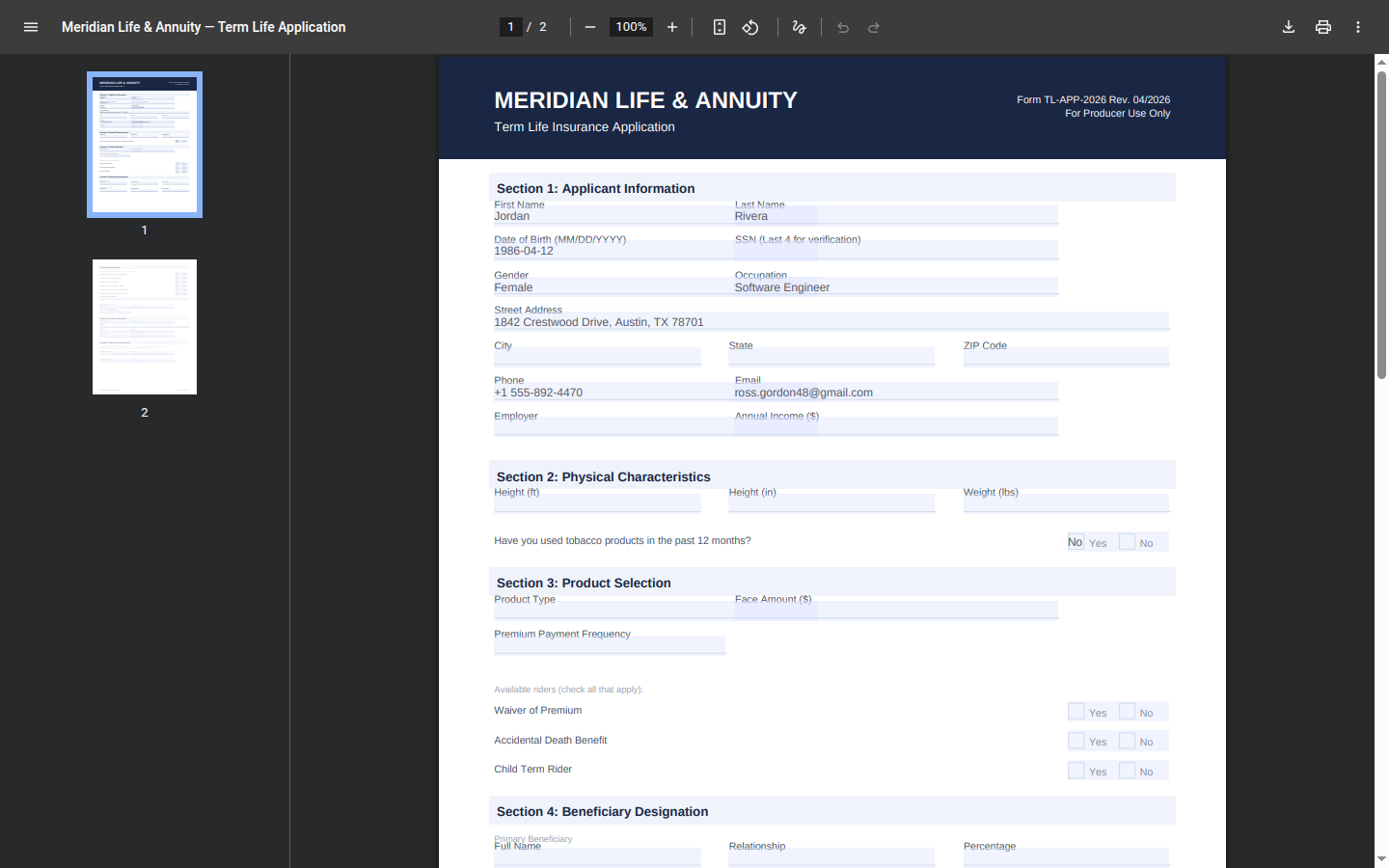
The term-life application PDF filled from Jordan Rivera's case data: date of birth, occupation, and address populated automatically.
Filled from case dataThe same form populated from a case
§ 04No-code data model

The data model, no code required.

A schema browser and editor for the workspace's data model (the entities and fields every case, form, agent, and document reads and writes), visible and editable without a migration or a developer.

New forms come on board through an eight-step wizard: upload a PDF, get AI-suggested field mappings, confirm them, and bind the form into a process. A paper form becomes a running step without hand-wiring.

Data model
Browse + edit, no code
Fields
Change without a migration
Onboarding
Upload → map → confirm → bind
Mapping
AI-suggested, human-confirmed
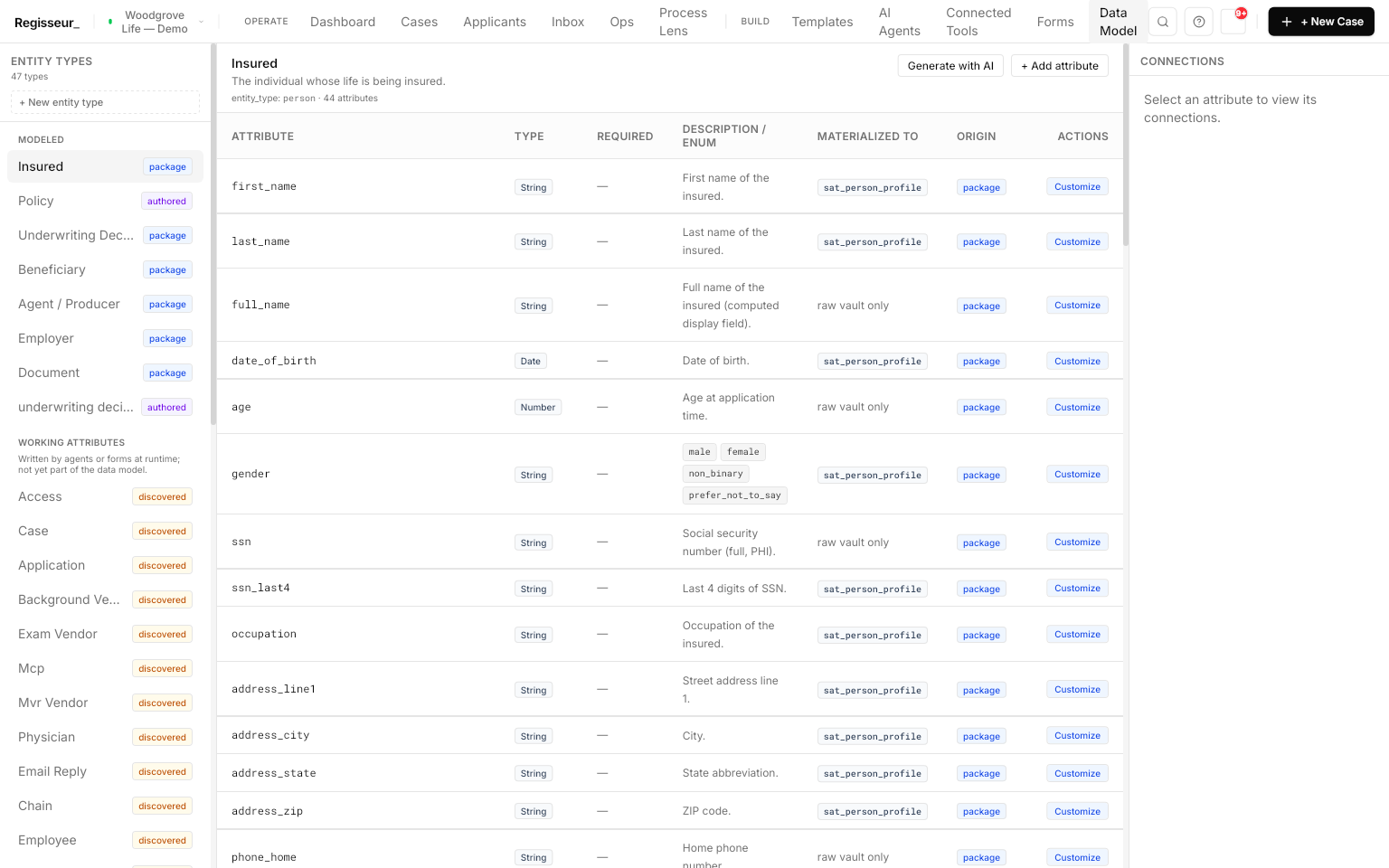
The Data Model page on the Insured entity: 44 attributes with types, enums, materialization targets, and per-field Customize and Generate-with-AI controls.
The workspace data modelEntities and attributes, browsable and editable · no migration
§ Next step

Onboard one of your forms and watch it capture, fill, and push.

Bring a PDF you fill by hand today. We'll map it, capture a case through it, and generate the filled document back out, one engine, start to finish.

Book a walkthrough →From a document to a case