One term life process. Four ways a case really goes.
Woodgrove Life’s term life new-business process, run end to end on four applicants at this demo insurer, in two configurations: in the first story a person approves the exam order; in the other three it is ordered automatically. Agents ask, chase, book and check. When a case cannot go on by itself, a person decides, and the record says why.
Complete from the start
Her application arrives complete, so nobody is chased. In this configuration a person approves the exam order and the policy; everything else runs by itself, to an issued policy.
- 01
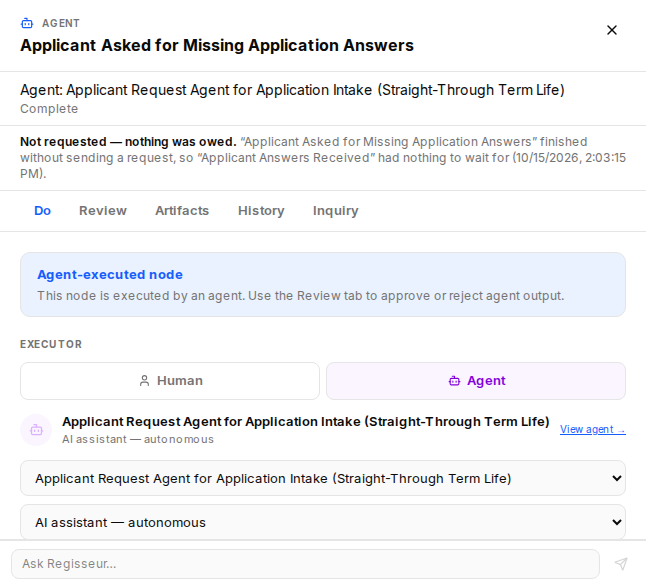
Her application arrives complete. The step that would chase her for missing answers finishes without sending anything: nothing was owed.
- 02
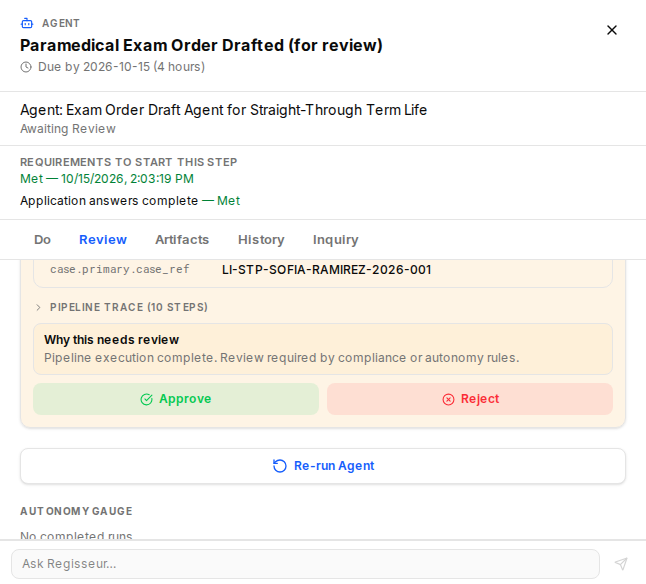
An agent drafts the paramedical exam order. In this configuration ordering an exam needs a person, so it waits: the case manager sees the draft and why it needs review, and approves or rejects.
- 03
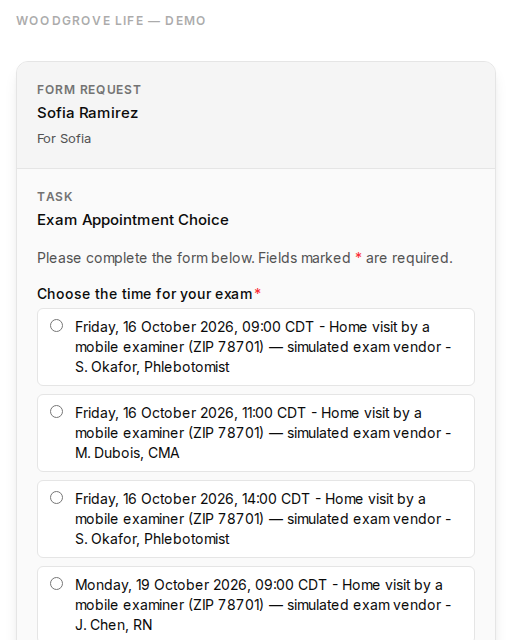
Once approved, the order goes to the exam vendor and Sofia gets a personal link with the examiner’s open times.
- 04
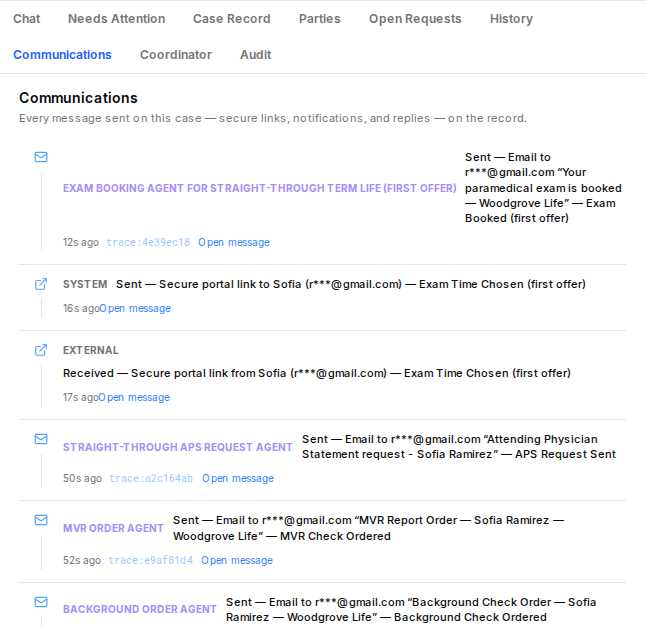
Everything the case sends is on the case: the offer of times, her booking confirmation, and the orders for her physician, driving and background records.
- 05
A rules engine sets the risk class and does the arithmetic; the model only writes the explanation.
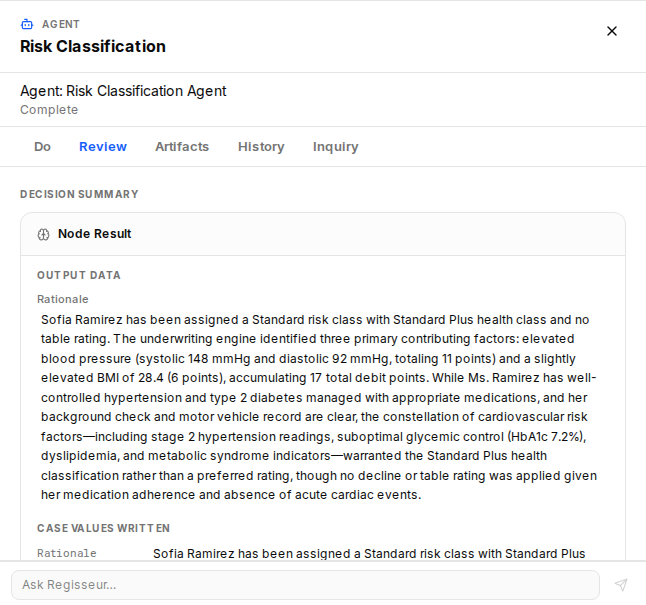
- 06
The policy document step starts only when its requirements are met, and shows each one: underwriting answers, a complete package, no conflicting records.
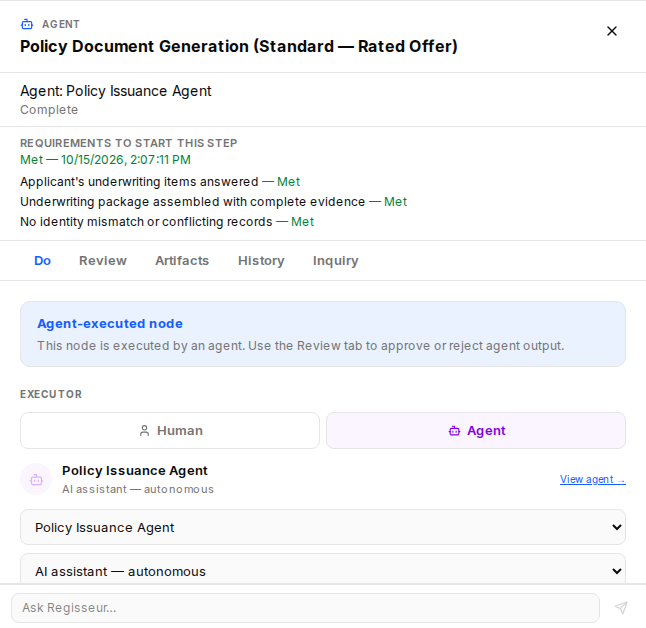
- 07
Policy issued: the case closes as Complete, with the premium on its header.

Chased until complete
Most of his answers are missing. The case asks, reminds on schedule, and gets the rest without anyone chasing by hand.
- 01
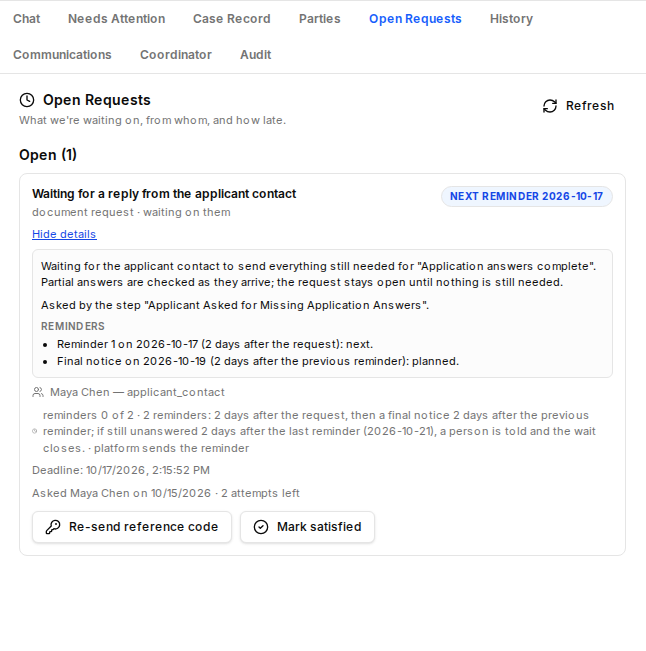
His application is missing answers, so the case asks him by email. Open Requests shows its plan: a reminder after two days, a final notice two days later, then a person is told.
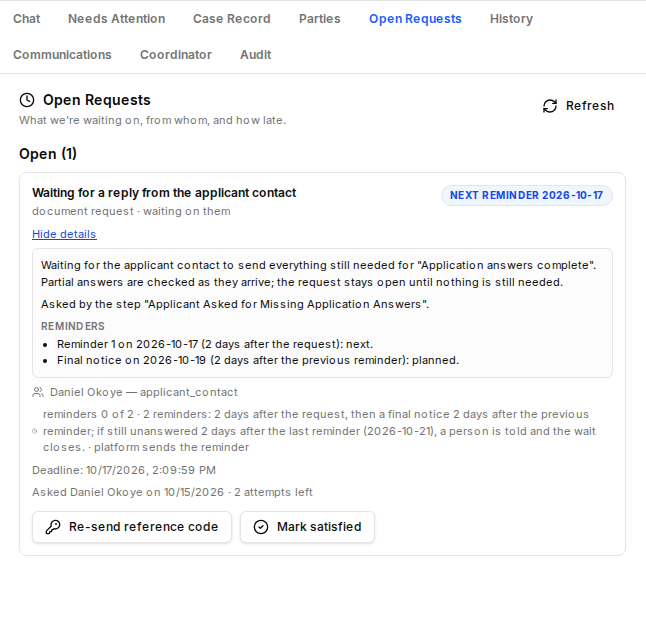
- 02
His link is protected: before it shows anything, it asks him to verify who he is.
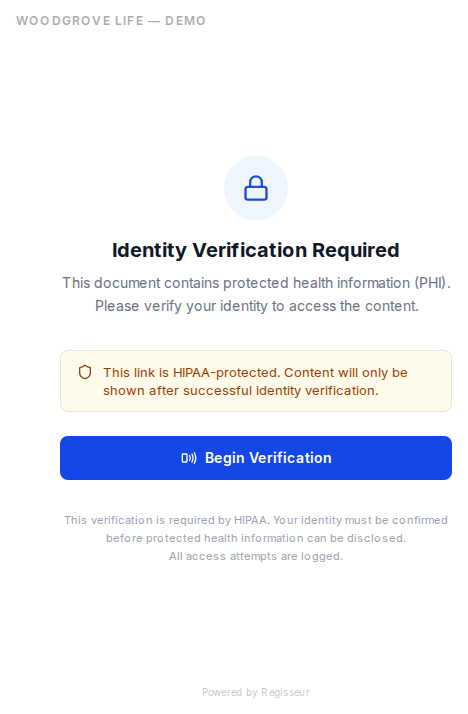
- 03
He answers 8 of the 21 questions. The page does not close the request; it tells him exactly what is still needed.
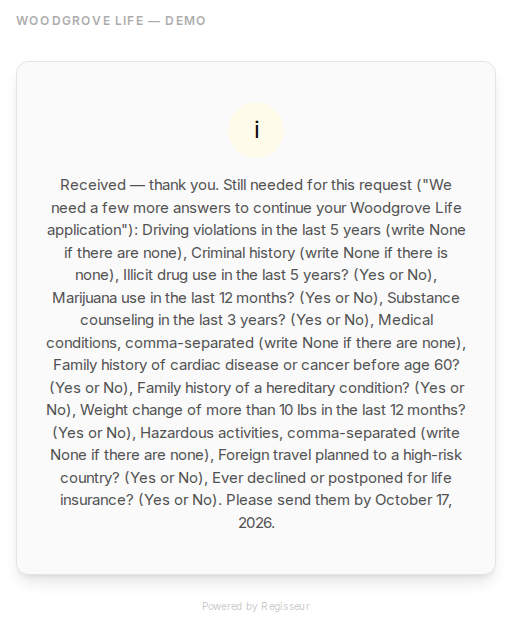
- 04
Two days on, the reminder goes out by itself with a renewed link. (Time was advanced for this case only, by running the real reminder process.)
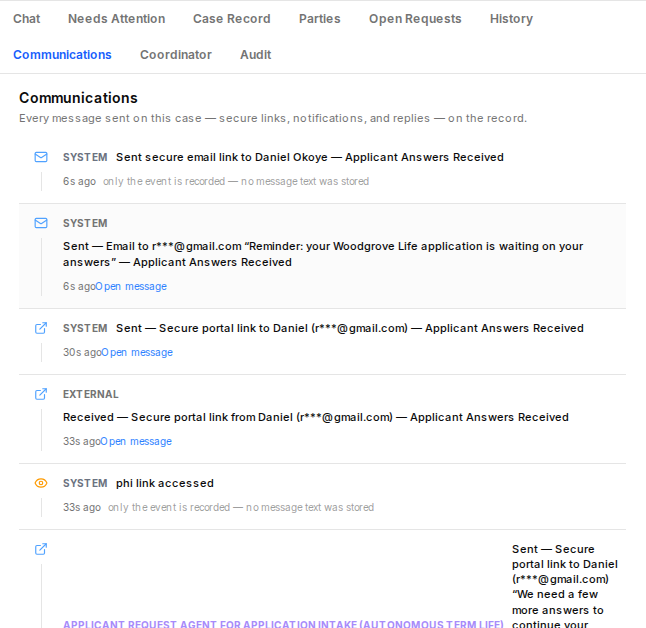
- 05
He finishes the remaining answers and the request closes.
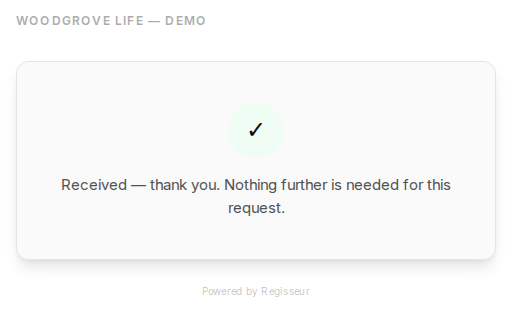
- 06
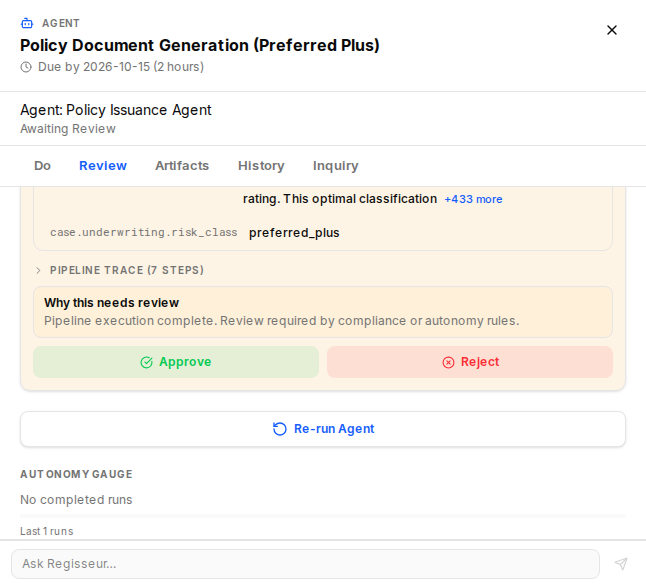
Risk classification routes the case: Preferred Plus, so the fast track. The record names the rule it used and the branches it did not take.
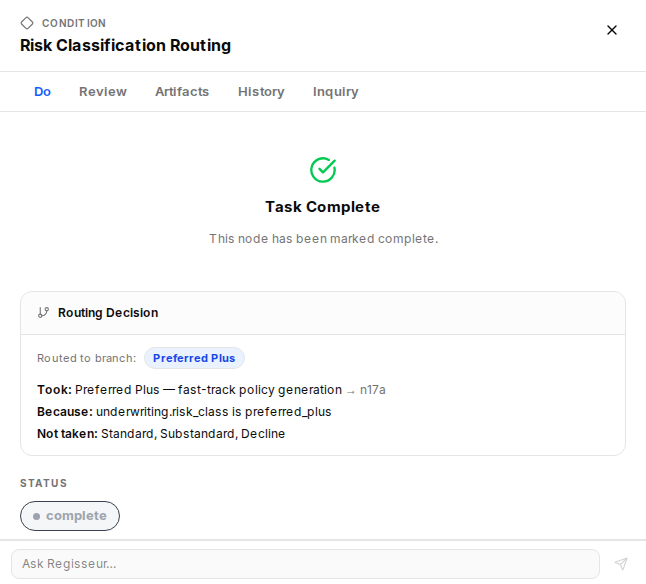
- 07
Issuing a policy is set to need a person, so it waits for the underwriter to approve.
- 08
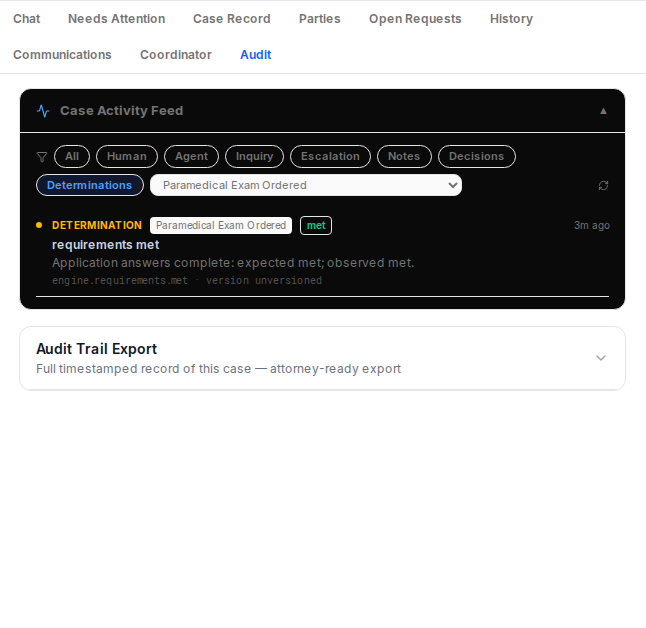
The Audit tab records each requirement check in the engine’s own words: expected met, observed met.
Silence, then a person
She never answers. The chase runs its course, the exam step is held, and a person finishes it, with the record showing exactly how.
- 01
Her application has no answers and no ZIP code. The case asks her and sets out its plan.
- 02
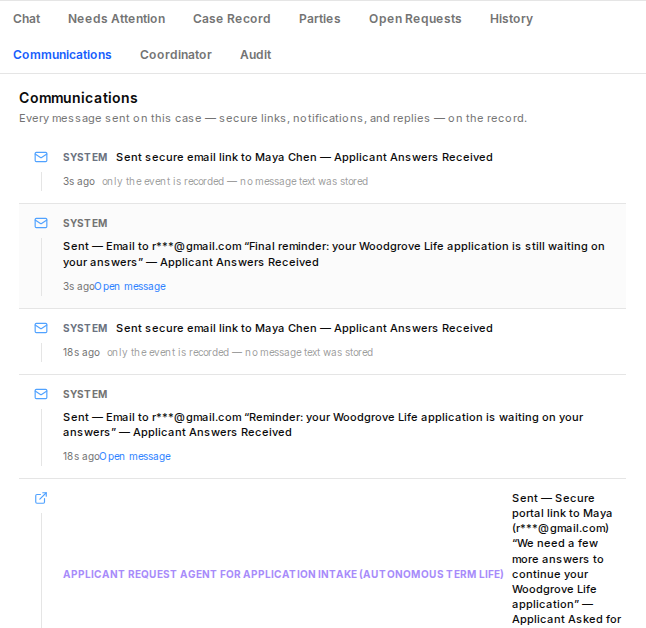
She does not reply. A reminder, then a final reminder, go out on schedule. (Time was advanced for this case only.)
- 03
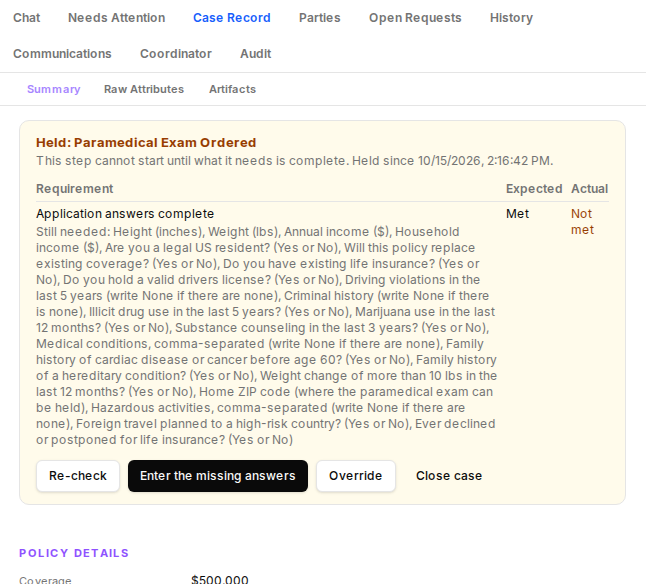
The exam step is held: its requirement, her answers, is not met. An admin can re-check, enter the missing answers, override with a reason, or close the case.
- 04
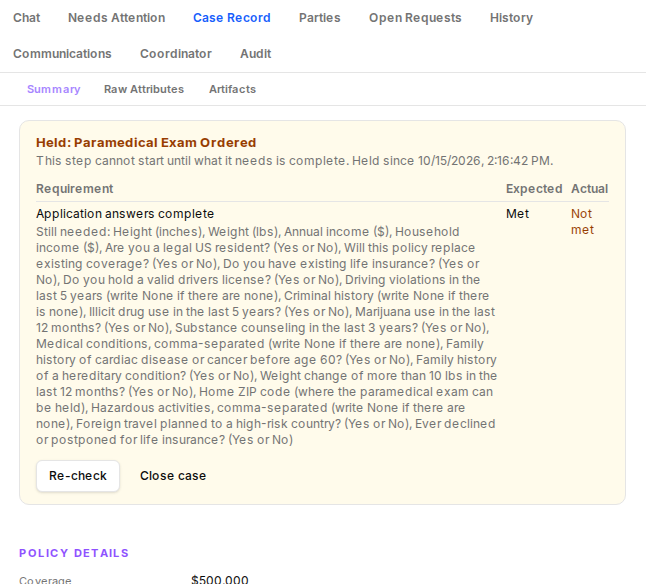
A case manager sees the same hold with fewer options: re-check or close. Overriding a requirement is only for the roles allowed to.
- 05
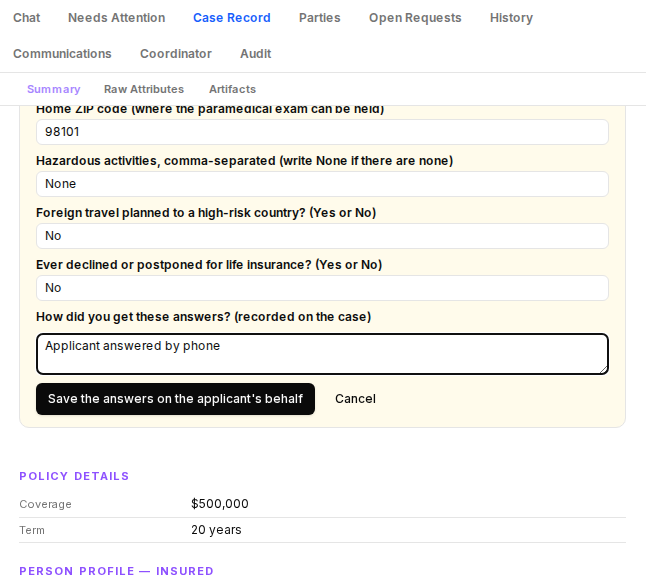
She answers by phone. The admin enters the answers on her behalf, with a note saying how they were obtained.
- 06
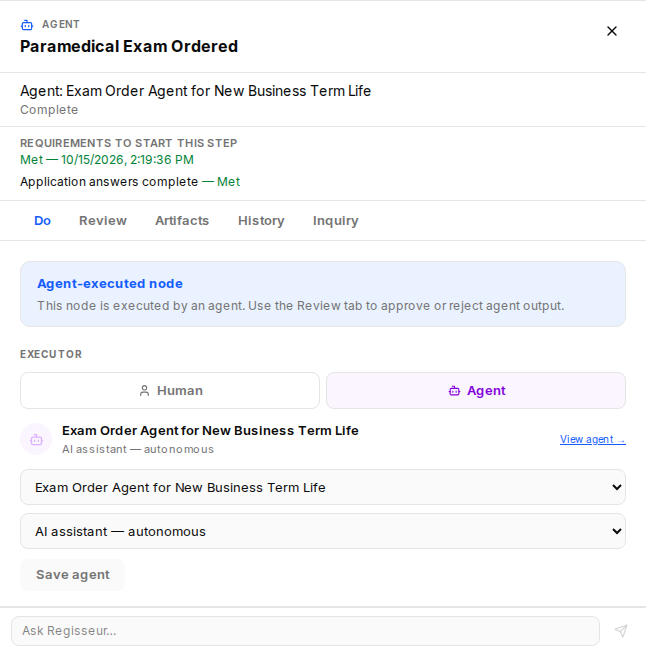
The requirement now reads Met because the answers are there, not because anyone overrode it.
- 07
The Audit tab shows both checks, in order: requirements unmet, then met.
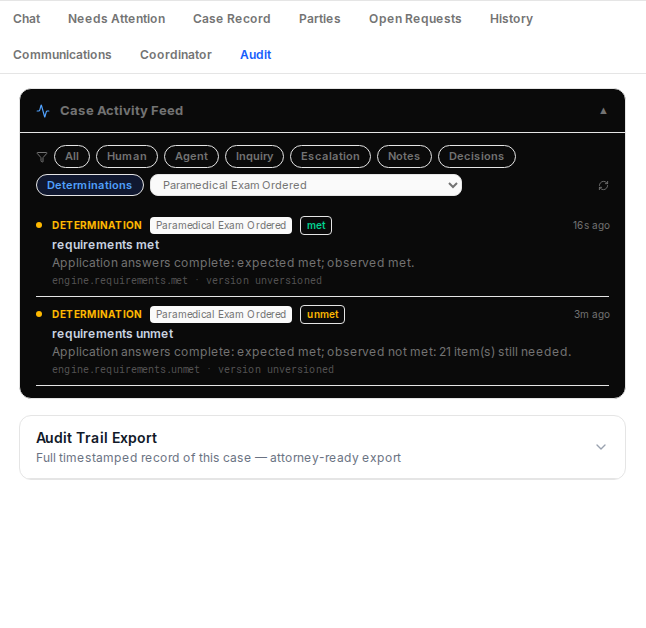
The wrong person’s records
The physician’s statement on file names another patient. The case will not go on by itself; a person decides, twice, and says why each time.
- 01
The underwriting package flags it: the physician’s statement names a different patient. Identity mismatch: true.
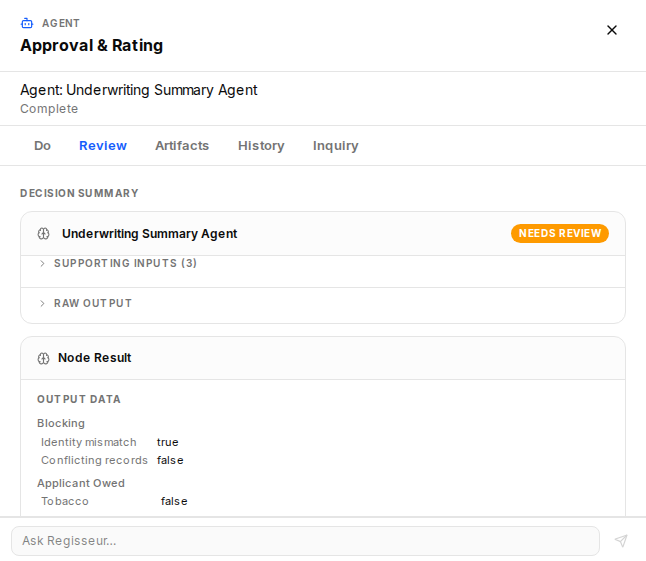
- 02
The policy document step is held on three requirements, including “No identity mismatch or conflicting records”.
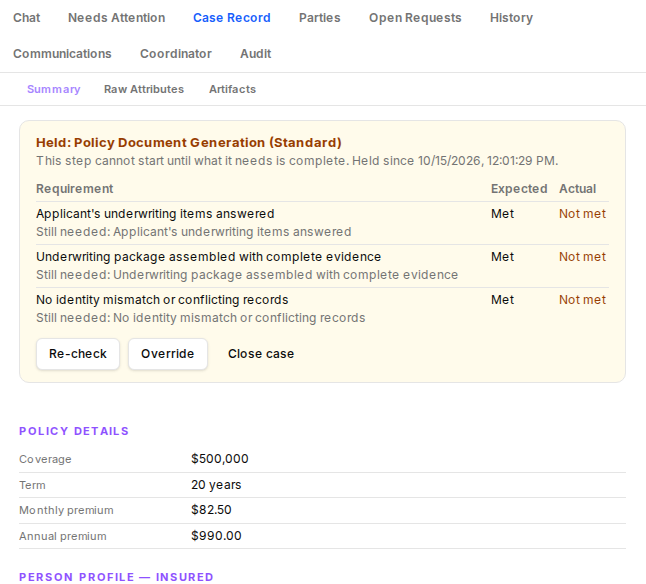
- 03
An override needs a written reason. The person overriding (here a demo admin account) records that the underwriter confirmed by phone that the statement belongs to someone else, and that the lab, background and driving records are his.
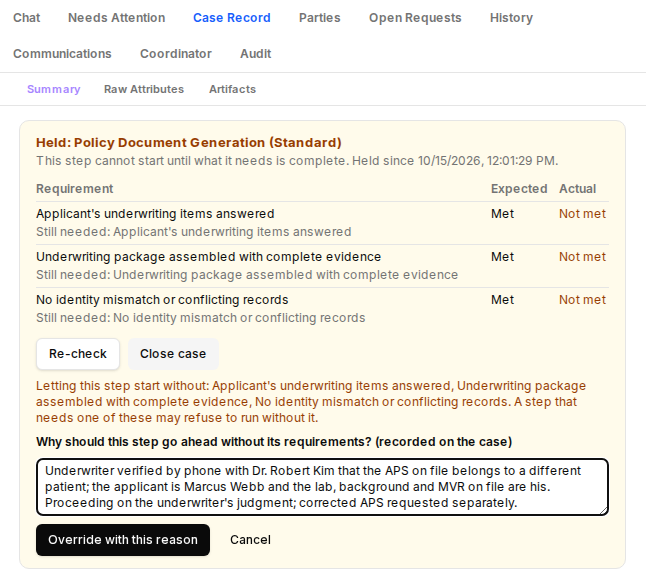
- 04
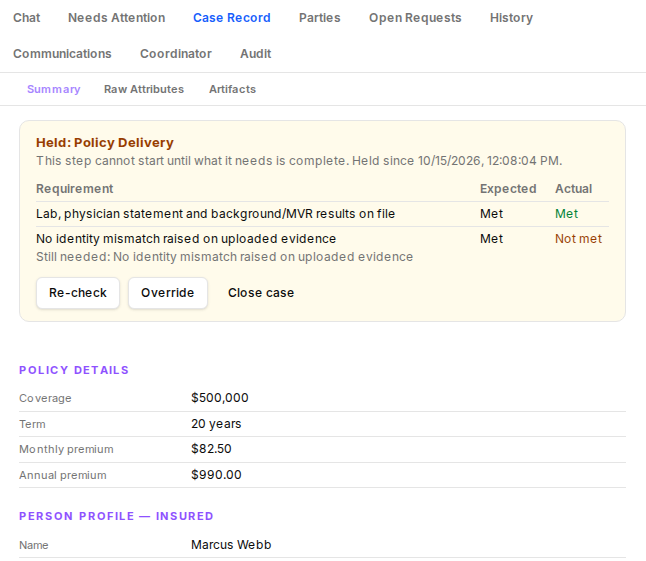
One override does not clear the next check. Policy delivery has its own requirement, and it holds again.
- 05
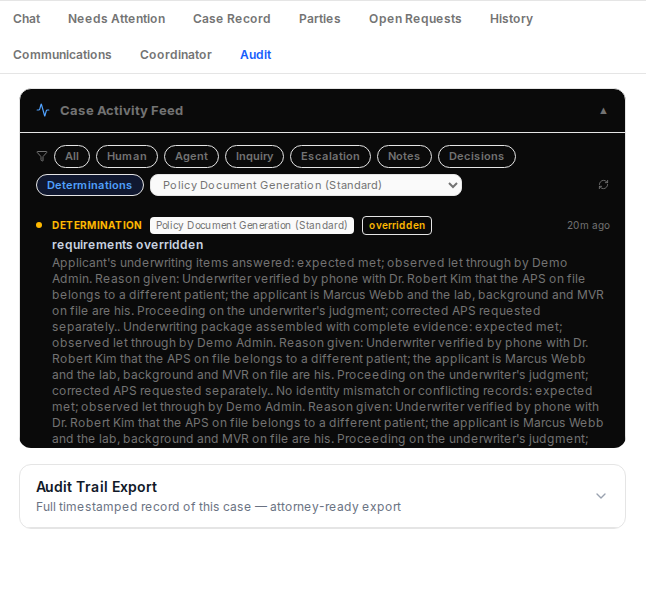
Each override is on the record: which account let it through, and the reason given.
- 06
The policy issues. The case summary still records the mismatch, and that the case went on to issuance on the overrides above.

Recorded on 15 October 2026 on a development build. The applicants are fictional and their email addresses only ever appear masked. The exam vendor and the records services are simulated stand-ins, and the documents are sample files. Where a story waits for days, time was advanced for that one case by running the real scheduled process, which is why the timestamps read seconds and minutes; nothing was edited by hand. Screens are cropped to the part that matters and are otherwise unedited.
This page shows 28 chapters from four of the six recorded stories. The other two, an exam that goes wrong twice and a decline, are being re-recorded and will be added.
Run your process the same way.
Bring one process with its chases, holds and sign-offs. We will walk it through the same steps: who gets asked, what waits for a person, and what the record shows afterwards.